
What it is
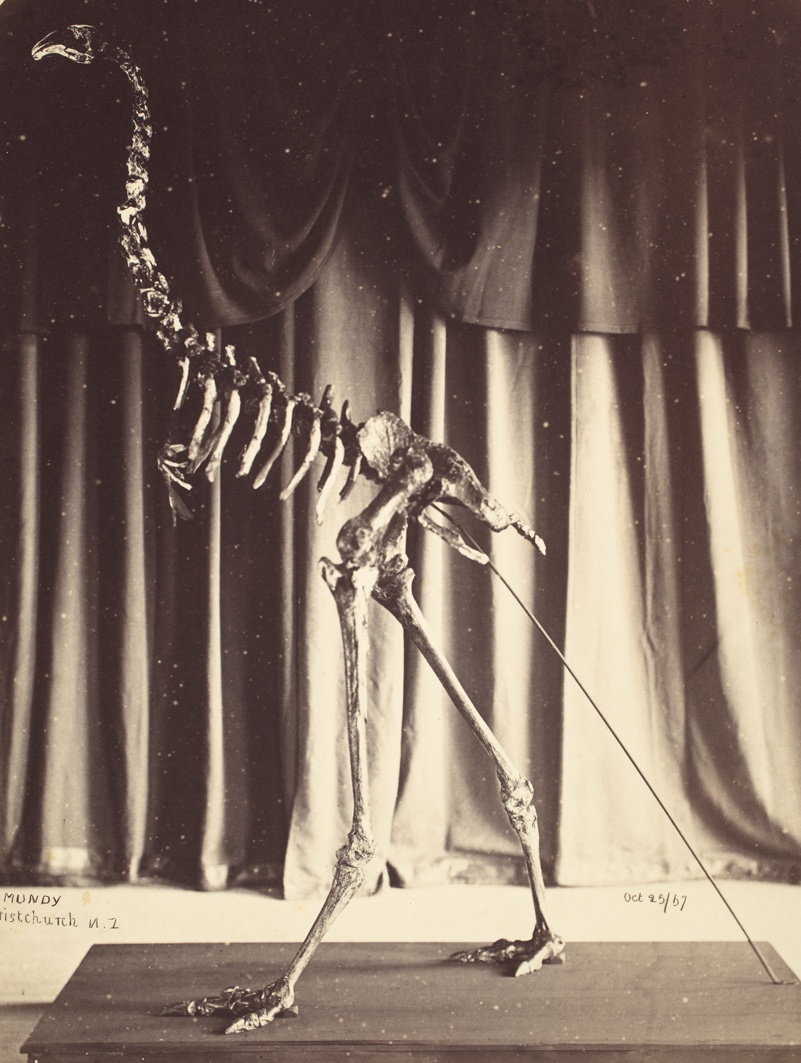
Moa were several species of large flightless palaeognath birds, unique to New Zealand. This entry uses the South Island giant moa (Dinornis robustus) as the face of the group. All moa are extinct. They had no mammalian land predators before people.
Range
New Zealand only. Giant Dinornis species on the North and South Islands; smaller moa in other habitats. None reached Australia or the wider Pacific.
What happened
Polynesian settlers (the ancestors of Māori) reached New Zealand in the thirteenth century. Dated bones and archaeological sites show moa hunting and large-scale burning of forest. Extinction of the group falls around the fourteenth–fifteenth centuries — commonly summarised as within about 150–200 years of settlement (Holdaway & Jacomb 2000 and later dating). Climate at that moment was not a comparable new shock.
When / status
Extinct by about the 1400s, after human colonisation — not a deep-time disappearance.
Human role
Overhunting and firing of forest by the first people on islands with naive megafauna.
Sources
Holdaway & Jacomb 2000 and later radiocarbon syntheses; museum records for Dinornis robustus.